
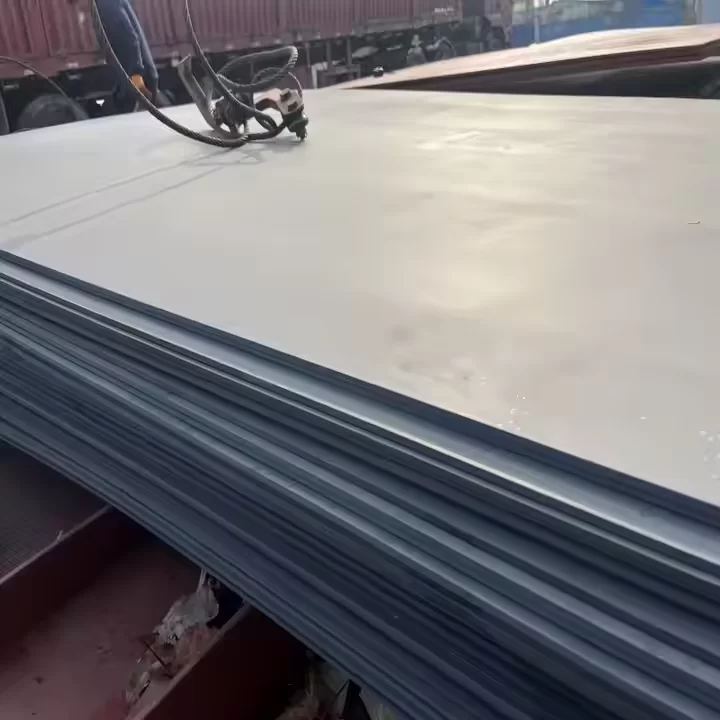


Q355B C D Q420Mb C D Q460Mb C D High Quality Medium Thick Plate Hot Rolled For Commercial Buildings High Strength
High-Strength Hot-Rolled Medium Thick Steel Plate
Product descriptions
Q355 Overview
Q355 steel is a low-alloy, high-strength steel used in welded structures designed to support stress and heavy loads. In the designation, Q refers to the yield point and 355 indicates its yield strength. Q355 also replaced Q345. These details make the grade identification relevant when a project team reviews material requirements, drawings, and purchasing documents. The product family featured here includes Q355B/C/D, Q420MB/C/D, and Q460MB/C/D hot-rolled medium thick plate for high-strength applications, including commercial buildings.
Hot-rolled plate is a practical material form for structural fabrication and construction work where plate components need to be cut, prepared, and incorporated into a larger assembly. Medium thick plate can be considered for building members and other structural parts according to the project design. The suitable grade and plate selection should be confirmed against the intended application and the engineering requirements, rather than inferred from the product name alone. This helps align supply, fabrication planning, and the final use of the material.
Uses and Structural Applications
Uses of Q355
Q355 steel has excellent mechanical properties, great weldability, and ample corrosion resistance. It can be used to manufacture petroleum storage tanks, high-pressure vessels, boilers, ships, power stations, and many other high-load structural parts. It is also widely used to make shipping containers, waste storage containers, weather containers, offshore containers, workshop containers, and toolboxes. These varied applications illustrate the role of Q355 across structural fabrication and equipment manufacturing; each use still depends on the project’s specifications and appropriate material selection.
For commercial building projects, high-strength medium thick plate can be specified for structural components when the design calls for plate steel suited to load-bearing work. It may form part of fabricated supports and other building assemblies, subject to the engineer’s design and the requirements of the construction project. The Q355, Q420M, and Q460M grade families named for this product provide buyers with grade options to assess during material planning. Selecting the correct designation and confirming it in procurement documentation helps maintain clarity from the order through fabrication.
Weldability is a practical consideration where plate is incorporated into welded structures. Fabricators can plan preparation and joining operations around the project drawings, approved procedures, and the characteristics required for the finished assembly. The reported corrosion resistance can also be relevant when assessing the intended service environment, while any protective treatment or ongoing care should be determined for the specific installation. The product description does not state plate dimensions or other numerical parameters, so those details should be confirmed for the required order.


Commercial Building Project Value
The high-strength medium thick plate described on this page is intended for buyers evaluating hot-rolled steel for commercial construction and other structural work. For a building application, the design team can consider the required grade, the function of each plate component, the connection and fabrication approach, and the conditions in which the completed structure will operate. Keeping those factors together during specification review supports a more coordinated process between designers, steel buyers, and fabricators.
In practical project planning, clearly identifying the requested Q355B/C/D, Q420MB/C/D, or Q460MB/C/D grade family can help distinguish material requirements across schedules and purchase orders. Teams can use the product designation when discussing the intended high-strength plate and then verify the applicable project documents before confirming an order. This provides a straightforward basis for communicating material needs without assuming unlisted dimensions, tolerances, or other technical values.
The plate’s structural use can support fabrication planning by making the material choice part of the wider assembly workflow. Buyers can coordinate delivery and processing needs with the fabricator, while the construction team can check that supplied material corresponds to the approved specification. After installation, inspection and maintenance should follow the practices established for the structure and its operating environment. In this way, appropriate selection, accurate documentation, and ongoing care help the plate serve its intended role over the life of the application.
Company Profile and Steel Product Range
Company Profile
Our company was founded in 1992 with a registered capital of US$29.8 million. We currently have over 6,000 employees. We are a large-scale, comprehensive steel enterprise integrating coal washing, coking, sintering, ironmaking, steelmaking, rolling, power generation, oxygen production, and scientific research. We have an annual production capacity of 10 million tons each of iron, steel, and materials. Our leading products include high-strength structural steel, steel for boilers and pressure vessels, shipbuilding steel, bridge steel, high-rise building steel, wear-resistant steel, automotive steel, pipeline steel, cold-rolled steel, and galvanized steel.

